Food Fraud Advisors

  • Home
  • About Us
  • Our Services
  • Tools, Templates and Training
  • Learn about food fraud
  • Report a food crime
  • News
You are here: Home / Archives for authenticity

18th June 2018 by foodfraudadvisors

How to design a food fraud testing plan

Authenticity testing of ingredients and foods is an important tool in the fight against food fraud, but it’s not easy to get it right.  Here are our recommendations to help you design a food authenticity testing plan.

  1. First define the goals of the testing plan.  Because different materials have different food fraud risk profiles, you will need a different testing protocol for each material that you want to test.  For each material to be tested, choose a test type and laboratory and set accept-reject criteria for test results.  Use our testing checklist to help.
  2. Decide how samples will be collected, and define the sample size with the help of your chosen laboratory. For each lot or batch of material that needs to be tested, figure out how to obtain a sample that is properly representative of that batch. Sampling protocols will depend on the size of the lot, the form of the food (solid, liquid, bulk, etc.) and the practicalities of accessing materials within the batch.  Learn more about sampling protocols from the US FDA’s laboratory manual.
  3. Choose a frequency of testing for each material and document it in the plan.
  4. Write down your goals, test methods, accept/reject criteria, sampling procedures and approved laboratories.  This written information will be the foundation for your testing plan document. Add a description of what action you will take if you get results that confirm or imply authenticity problems with the sample. Who will you report the results to? Who is responsible for making decisions about actions to be taken?  Add document control features and file the plan within the food fraud section of your food safety management system.
  5. Implement your plan.  Be prepared to change your test frequencies or test methods as new information becomes available.  Review your test plan at least annually to make sure it aligns with your food fraud vulnerability assessment results.

Read this next: Food fraud testing frequency: how often should you test?


Share this:

  • Share on Facebook (Opens in new window) Facebook
  • Share on X (Opens in new window) X
  • Share on LinkedIn (Opens in new window) LinkedIn
  • Email a link to a friend (Opens in new window) Email

Filed Under: Learn, Prevention and Mitigation

5th March 2017 by foodfraudadvisors

Cinnamon fraud warning

Cassia bark, which resembles cinnamon bark has been imported to India from China in large quantities in recent months.  Cassia is a common diluent and substitute for cinnamon.  Cassia bark is toxic.  Just last year researchers found seven of ten samples of cinnamon bark in India to have been adulterated with cassia.  India is the world’s largest exporter of spices.

Cinnamon is at very high risk of fraudulent adulteration, substitution and dilution and the increase in cassia trading has increased that risk.  Purchasers of cinnamon should remain vigilant, and those purchasing in large volumes should implement authenticity testing regimes. Read more about cassia bark imports

Cinnamon spice fraud test cassia bark adulteration genuine

For more news of emerging risks, check out our food fraud reports; no subscription required

Industrial dye adulterants in wealthy countries

There have been reports of illegal dyes found in jars of beetroot in Germany.  The preserved beetroot contained Rhodamine B.  This follows previous reports of adulteration of ‘natural plant extract’ colourants in Europe.  The ‘natural’ extracts were supposedly made from hibiscus and beetroot but contained Reactive Red 195.  Illegal dyes, including those designed for textile manufacturing are common food adulterants in developing countries, where they have been used by unscrupulous merchants in large-scale manufacturing, artisan food businesses and at the retail level.  Developed countries are not immune.  Purchasers of very brightly coloured food should remain vigilant to this risk.

Food packaging fraud uncovered in USA

A study in North America found toxic chemicals in one third of food packaging materials that are supposed to be safe for food contact.  It is unusual for packaging to be tested for the purposes of fraud detection.  The substitution of cheaper low grade packaging materials for food-grade materials would be very profitable.  The cost of raw materials for plastic packaging is rising which increases the likelihood of food fraud.  There is likely to be significant fraud occurring in the ‘food-grade’ plastics sector and this fraud can be expected to continue.

packaging fraud fake toxic containers drums

Free-range milk hits the shelves

Free-range milk has been introduced to the United Kingdom by a large supermarket chain.  There are no laws that define free-range milk in the United Kingdom.  Premium priced ‘free-range’ milk is likely to be indistinguishable from other milks to the average consumer.  There is a risk that unscrupulous operators will mis-declare milk as ‘free range’ or take advantage of the lack of legal definition of such.  There is also a risk that some dairy brands may inadvertently breach their own claims about the number of days a herd has been outdoors.  Milk from less well-known brands and small traders is most at risk of inaccurate claims around ‘free-range’.

Trouble is brewing in craft beer

Walmart in the USA has been accused of misleading consumers by marketing a mass-produced beer as a ‘craft-brew’.  Ironically the beer is sold under the brand name ‘Trouble Brewing’.  Craft beer attract significantly higher prices than mass-produced beer and is at high risk of being fraudulently marketed.

craft beer trouble fake counterfeit genuine artisan
Get our comprehensive report today

Share this:

  • Share on Facebook (Opens in new window) Facebook
  • Share on X (Opens in new window) X
  • Share on LinkedIn (Opens in new window) LinkedIn
  • Email a link to a friend (Opens in new window) Email

Filed Under: Adulteration, Horizon Scanning

10th October 2016 by foodfraudadvisors

Food Fraud; news of emerging issues

The macadamia nut tree out the back of my place is flowering and is covered with long, yellow flower spikes.  In a few months it will be covered in nuts.  However, in world markets right now there is a shortage of whole macadamia nut kernels.  While stocks remain scarce, macadamia products are at increased risk of fraudulent activity.  Whole kernels are less likely than other macadamia products to be affected by fraudulent adulteration, however they are still at risk of fraudulent misrepresentation of country of origin, packing date and organic status.  Nut pieces, meals and flours are at risk of fraudulent adulteration with cheaper fillers and substitutes.

Here are some other interesting issues in food fraud or potential food fraud from the last month:

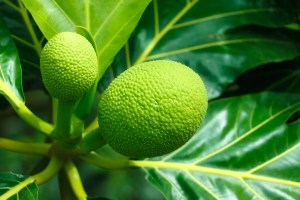
Are breadfruit products an emerging fraud risk?  Breadfruit is a starchy tropical fruit that grows on large trees in the Pacific Islands and the Caribbean. Breadfruit flour is said to have huge potential as a gluten-free product and breadfruit could become the next ‘superfood’, but right now demand outstrips supply and new trees take 3 to 5 years to bear fruit.  If the marketing gurus succeed in making breadfruit the next big thing, it will attract a premium price in North America and Europe and gluten-free breadfruit flour could become an attractive target for fraud.  I will be watching this product closely to see how the situation develops.

breadfruit
Is breadfruit destined to be the next ‘superfood’?

Hairy crabs, a delicacy in parts of China, are in season now, with crabs from particular lakes being very highly prized and even more expensive than their counterparts from other lakes.  A crab-marketing group representing hunters from Yangcheng lake designed an anti-counterfeiting system based on bar-code technology for Yangcheng crabs.  Unfortunately, they discovered that sellers of crabs from other lakes were forging the anti-fraud bar-codes.   I predict this type of fraud to increase over the next few years as consumers come to expect and trust anti-counterfeit measures applied to expensive consumer items.

For more on these topics plus expert analysis of the food fraud risk profiles of hundreds of other food materials check out our food fraud risk information database.

Share this:

  • Share on Facebook (Opens in new window) Facebook
  • Share on X (Opens in new window) X
  • Share on LinkedIn (Opens in new window) LinkedIn
  • Email a link to a friend (Opens in new window) Email

Filed Under: Food Fraud, Horizon Scanning

18th September 2016 by foodfraudadvisors

Supplements, the last frontier?

The supplement industry received a wakeup call last year, particularly in the USA, after the New York attorney general commenced legal proceedings against 13 supplements manufacturers alleging that the supplements did not contain exactly what they should have contained.  The sampling and test methodology used to support the prosecution has been widely criticised, and the industry considers the results to be questionable at best.  Nevertheless, the issue of authenticity and adulteration has received extra attention among producers and users of supplements since then.

Some examples of recent supplement frauds have involved grape seed extract adulterated with peanut skins.  Ironically, grape seed extract has also been found to be an adulterant itself, with some cranberry products adulterated.  Within the supplements investigated by the New York attorney general, valerian was found to contain garlic and wild carrot, echinacea was found to contain rice and buttercup DNA while St Johns wort was alleged to contain DNA from a species of ornamental house plant.

What’s being done?  Well you won’t read about it in the press but there’s no question that large retailers, including those that were targeted by the New York attorney general, such as Walmart, Target, GNC and Walgreens, have reviewed and tightened up their purchasing contracts; supplement testing methodology has been reviewed and reputable supplement manufacturers are testing more of their ingredients more often.  And that’s great news for consumers.


Share this:

  • Share on Facebook (Opens in new window) Facebook
  • Share on X (Opens in new window) X
  • Share on LinkedIn (Opens in new window) LinkedIn
  • Email a link to a friend (Opens in new window) Email

Filed Under: Adulteration, Authenticity, Food Fraud, Prevention and Mitigation, Regulatory

10th August 2015 by foodfraudadvisors

Authentic Food versus Safe Food

Food authenticity is utterly dependent on the way a food is marketed or presented.  A piece of meat sitting on a plate is just a piece of meat until someone tells you something about it; is it organic? is it free-range? grass-fed? hormone-free?  It is only after a product has been described in some way that authenticity becomes relevant.  Authentic food is food (or drink) that is what it is claimed to be.  Simple!  Or is it?  Read more about food authenticity here.

Safe food is safe to eat and it’s as simple as that.  It doesn’t matter how the food is described or sold, whether it’s horse meat or venison or giraffe, if it’s safe to eat then it’s safe to eat.  Simple!  …. well pretty simple anyway… read more about safe food here.

20150727_115004

Share this:

  • Share on Facebook (Opens in new window) Facebook
  • Share on X (Opens in new window) X
  • Share on LinkedIn (Opens in new window) LinkedIn
  • Email a link to a friend (Opens in new window) Email

Filed Under: Authenticity, Food Safety, Learn

  • « Previous Page
  • 1
  • 2
  • 3
  • 4
  • Next Page »

MORE FROM FOOD FRAUD ADVISORS

Tomato Fraud Bombshell

A food fraud bombshell has just exploded in the Australian processed tomato industry. The impact will be felt … [Read More...]

Smart packaging to fight wine counterfeits

Wine bottle caps that contain Near Field Communication (NFC) and Radio Frequency Identification (RFID) chips, which can … [Read More...]

Red highlighting shows the difference between the real and fake chocolate packaging.

Genuine article test: fake chocolate brand

A brand owner whose Dubai-style chocolates were faked by fraudsters has published pictures of real and counterfeit … [Read More...]

Two packets of paprika powders that have been adulterated with dye and annatto.

This is Food Fraud

Food fraud in pictures We’ve come a long way with food fraud awareness since I started working on the subject in 2015. … [Read More...]

Close-up of a pile of frozen shrimp.

Fraud rates of 33% in seafood (USA)

A survey of imported frozen shrimp, squid and tilapia products found 36% (n = 28) were affected by short-weighting, … [Read More...]

follow

  • View foodfraudadvice’s profile on Facebook
  • View karenconstable4’s profile on Twitter
  • LinkedIn

© Copyright 2015 - 2026 Food Fraud Advisors · All Rights Reserved · Privacy Policy · Return and Refund Policy