Food Fraud Advisors

  • Home
  • About Us
  • Our Services
  • Tools, Templates and Training
  • Learn about food fraud
  • Report a food crime
  • News
You are here: Home / Archives for labeling

19th September 2018 by foodfraudadvisors

September food fraud update; trade wars, fruit scares and spuds

The ‘trade war’ between the USA and China is really hotting up, with China having imposed import tariffs of up to 25% on US lobsters and other food products in the previous 2 months.  The presence of tariffs greatly increases the risk of fraudulent cross-border activities; Food Fraud Advisors predicts that the new China tariffs will lead to significantly more food fraud within the Chinese-American trade sector as well as having a knock-on affect on food trade internationally.

There have already been allegations of fraud related to the tariff imposition in the North American lobster market.  Canadian lobsters can be imported to China without incurring the tariffs imposed on lobsters from the United States.  It has been alleged that lobsters grown in the USA are being shipped to Canada, re-labeled as Canadian lobsters then exported to China.  Canadian lobster growers fear damage to the ‘Canada’ brand from these activities.

The strawberry scandal in Australia has hit local consumers, retailers and growers hard.  It started with two consumers in the state of Queensland finding metal needles inside fresh strawberries.  The affected brand and its sister brand from the same grower were pulled from shelves.  Within days another needle-like object was found in strawberries from a different brand in a different state; the fruit source was completely different and the incident was labelled a ‘copycat crime’.  In Australia strawberries are typically sold to consumers in clear clam-shell containers with four air holes in the top surface.  The air holes are large enough to allow access to the fruit inside with a small sharp object like a needle while the strawberries are displayed on a supermarket (grocery store) shelf.  Public response has been confusion; why would anyone want to do such a thing?  Since then, other fruits, including apples and bananas have been similarly affected, again, in what appear to be completely independent occurrences.  The food safety sector in Australia is at a loss as to how to prevent this type of incident; fruit is by necessity displayed and accessible for consumers to touch prior to purchase, leaving it vulnerable to malicious adulteration.

Meanwhile, strawberry growers in Australia, who were already struggling to get good prices for their bumper harvest, have seen demand for their fruit plummet.  Media outlets have published reports about farmers who are dumping tonnes of unwanted fruit because the wholesale price has fallen below the cost of production.

Whole potatoes are generally thought to be at low risk of food fraud because of their relatively low value and because of their easily recognisable form.  However, like all fruit and vegetables, they are at risk of being misrepresented with respect to their geographic origin and their variety.  Growers groups have demanded that government authorities investigate allegations of potato fraud in Ireland, after a successful campaign to encourage consumption of locally-grown Queen potatoes.  It has been alleged that imported potatoes and potatoes of other varieties are being re-labelled as Irish Queen potatoes, providing an economic gain for the perpetrators of this fraud.


Share this:

  • Share on Facebook (Opens in new window) Facebook
  • Share on X (Opens in new window) X
  • Share on LinkedIn (Opens in new window) LinkedIn
  • Email a link to a friend (Opens in new window) Email

Filed Under: Food Defense, Food Fraud, Food Safety

6th May 2017 by foodfraudadvisors

Food Fraud Risk Database

It’s huge, it’s completely free and open-access; no log-in required.  It’s our

Food Fraud Risk Information Database

Compiled by food fraud experts and containing information about hundreds of different food types, including past incidences of food fraud and emerging threats, you can use it to meet the requirements of your food safety management system, for

  • food fraud vulnerability assessments,
  • food safety risk assessments
  • hazards from intentional adulteration requiring preventive controls (FSMA)
  • pre-filtering and
  • horizon scanning for emerging threats

You can choose to ‘watch’ the database to receive notifications every time new information is added.  You can also watch individual food types (say “Beef”) to receive updates for just that food type.

Access is free, although if you want to receive notifications you will need to create a (free) Trello account.  We do not receive income from Trello for new sign-ups.

Check it out today

food fraud risk database
Food Fraud Risk Information database, created by Food Fraud Advisors, hosted by Trello.com


Share this:

  • Share on Facebook (Opens in new window) Facebook
  • Share on X (Opens in new window) X
  • Share on LinkedIn (Opens in new window) LinkedIn
  • Email a link to a friend (Opens in new window) Email

Filed Under: Food Fraud, Horizon Scanning, VACCP

16th March 2017 by foodfraudadvisors

Blue wine, banana pens and touch-screen plates

From the fun food facts files:

Did you know that the Dominos research center in Japan was trialling delivery by reindeer?  A statement from the company said that it was a difficult decision to abandon the trial and reindeers are very difficult to control.  Uh huh.  Also from Japan and the first of its kind: a pen that can be safely used to write messages on banana skin.  I never knew I needed one of those.

Did you know that cabin conditions affect the way we perceive taste and texture?
Strawberries: not so sweet at 30,000 feet.


From Britain comes research that explains why aeroplane food never tastes really good.  It isn’t just because it has to be pre-cooked and schlepped from kitchen to airport to thousands of feet in the sky and then reheated before you eat it, it is also due to the conditions inside a passenger plane which actually alter our perceptions of food.  Within the cabin the atmosphere is very dry and the air pressure is lower than usual.  This affects the way our tastebuds work.  Low humidity decreases our sensitivity to odours, which are in fact the main conveyors of flavour.  Oddly, the loud background noise also has an effect on how we perceive certain tastes, with salty and sweet tastes perceived less intensely.  Loud background noise also makes food sound crunchier, which can change the apparent texture of food.

iPads.  We love them.  But do we love them enough to eat off them?  Restaurants are serving food on the screens of ipads.  One establishment serves a dish of truffle croquettes on an iPad that shows video of dogs searching for truffles.  I wonder how they clean them afterwards?

Blue wine has label compliance experts scratching their heads in EU
Gik blue wine. Looks fabulous, but what does it taste like? Gik.


Blue wine.  It’s a thing.  It has a gorgeous neon hue achieved with natural additives.  But for Gik, the Basque company that makes blue wine, there are legal headaches on the horizon, as Spanish lawmakers grapple with the question of what can and cannot be called ‘wine’.  Last month, Gik was fined by Spanish regulators for breaching European wine laws, which do not allow wine makers to add colourants that are not specifically approved in the oenological regulations.  Unsurprisingly, blue colourants are not on the list. Gik is appealing the fine and has filed a petition.  In the meantime, they have re-labelled and re-formulated their blue beverage by adding 1% grape must so that the product no longer needs to meet the rules for ‘pure wine’.  It’s not available where I live, which is a shame because I would love to have a taste.


Share this:

  • Share on Facebook (Opens in new window) Facebook
  • Share on X (Opens in new window) X
  • Share on LinkedIn (Opens in new window) LinkedIn
  • Email a link to a friend (Opens in new window) Email

Filed Under: Fun Food Facts

10th October 2016 by foodfraudadvisors

Food Fraud; news of emerging issues

The macadamia nut tree out the back of my place is flowering and is covered with long, yellow flower spikes.  In a few months it will be covered in nuts.  However, in world markets right now there is a shortage of whole macadamia nut kernels.  While stocks remain scarce, macadamia products are at increased risk of fraudulent activity.  Whole kernels are less likely than other macadamia products to be affected by fraudulent adulteration, however they are still at risk of fraudulent misrepresentation of country of origin, packing date and organic status.  Nut pieces, meals and flours are at risk of fraudulent adulteration with cheaper fillers and substitutes.

Here are some other interesting issues in food fraud or potential food fraud from the last month:

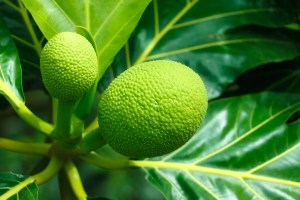
Are breadfruit products an emerging fraud risk?  Breadfruit is a starchy tropical fruit that grows on large trees in the Pacific Islands and the Caribbean. Breadfruit flour is said to have huge potential as a gluten-free product and breadfruit could become the next ‘superfood’, but right now demand outstrips supply and new trees take 3 to 5 years to bear fruit.  If the marketing gurus succeed in making breadfruit the next big thing, it will attract a premium price in North America and Europe and gluten-free breadfruit flour could become an attractive target for fraud.  I will be watching this product closely to see how the situation develops.

breadfruit
Is breadfruit destined to be the next ‘superfood’?

Hairy crabs, a delicacy in parts of China, are in season now, with crabs from particular lakes being very highly prized and even more expensive than their counterparts from other lakes.  A crab-marketing group representing hunters from Yangcheng lake designed an anti-counterfeiting system based on bar-code technology for Yangcheng crabs.  Unfortunately, they discovered that sellers of crabs from other lakes were forging the anti-fraud bar-codes.   I predict this type of fraud to increase over the next few years as consumers come to expect and trust anti-counterfeit measures applied to expensive consumer items.

For more on these topics plus expert analysis of the food fraud risk profiles of hundreds of other food materials check out our food fraud risk information database.

Share this:

  • Share on Facebook (Opens in new window) Facebook
  • Share on X (Opens in new window) X
  • Share on LinkedIn (Opens in new window) LinkedIn
  • Email a link to a friend (Opens in new window) Email

Filed Under: Food Fraud, Horizon Scanning

  • « Previous Page
  • 1
  • 2

MORE FROM FOOD FRAUD ADVISORS

Close-up of a pile of frozen shrimp.

Fraud rates of 33% in seafood (USA)

A survey of imported frozen shrimp, squid and tilapia products found 36% (n = 28) were affected by short-weighting, … [Read More...]

A group of honey bees on beeswax.

Undercover honey investigators

I previously wrote about how my daughter, who loves honey and eats a lot of it here in Australia, complained that all … [Read More...]

Photo of a can of Coca-Cola Diet . The brand is one of the most popular soda products in the world and it is sold almost everywhere.

Counterfeit Diet Coke in London?

Counterfeiting is the imitation of a food or beverage, including its brand, packaging, or labeling, with the intent to … [Read More...]

A woman wearing safety glasses and a lab coast holds up a blood sample in a test tube.

Massive fraud in U.S. antibiotic-free meat

Consumers perceive antibiotic-free meat as a healthier, more ethical choice than meat from animals raised with … [Read More...]

A packaged meat product with its false USDA number highlighted by a red circule.

A faked inspection mark prompts a recall in the US

While food fraud can result in food safety problems, it’s very rare to see a recall for food fraud that is initiated … [Read More...]

follow

  • View foodfraudadvice’s profile on Facebook
  • View karenconstable4’s profile on Twitter
  • LinkedIn

© Copyright 2015 - 2026 Food Fraud Advisors · All Rights Reserved · Privacy Policy · Return and Refund Policy