Food Fraud Advisors

  • Home
  • About Us
  • Our Services
  • Tools, Templates and Training
  • Learn about food fraud
  • Report a food crime
  • News
You are here: Home / Archives for Labelling

1st April 2026 by Karen Constable

Massive fraud in U.S. antibiotic-free meat

Consumers perceive antibiotic-free meat as a healthier, more ethical choice than meat from animals raised with antibiotics and pay higher prices for such meat. However, investigations reveal that many ‘antibiotic-free’ products in the United States are not what they claim to be.

I previously shared shocking figures released by the USDA’s Food Safety Inspection Service (FSIS) based on the results of a 2023 testing program that included 189 samples from 84 slaughter establishments in 24 states.

The FSIS found antibiotic residues in liver and kidney samples of 20% of cattle destined for the ‘Raised without antibiotics’ (RWA) market.

That is, approximately 20% of US beef claimed to be raised without antibiotics was being marketed with false claims.

🍏 Find my original report here 🍏

What surprised me, when I stumbled upon that data, published in August 2024, was that it had not provoked any kind of outrage – or in fact any response at all – in mainstream media outlets.

Surely this was a scandal that consumers would want to know about?

It didn’t help that the figures were not published as a report but buried in the ‘Background’ section of an FSIS page announcing a comment period on a guideline for meat labelling claims.

A woman in safety glasses and lab coat is holding up a vial of red liquid.
The USDA’s FSIS sampled material from 189 cattle destined for the ‘Raised Without Antibiotics’ market and found antibiotic residues in 20% of animals. Image: DC Studio on Freepik.


This was not the first time antibiotic residues had been found in RWA meat and cattle. In 2022, researchers from the George Washington University reported that 15% of US RWA cattle contained antibiotic residues. Also in 2022, advocacy group Farm Forward found antibiotics in RWA beef purchased from Whole Foods.

In letters from the USDA to the companies found to be engaging in deceptive behaviour, obtained under freedom of information by Farm Forward, the USDA told the companies they may have produced misbranded product but would not be subject to any enforcement action.

In 2025, Farm Forward publicly named the companies with positive results, revealing that antibiotics were detected in beef declared ‘Raised without antibiotics’ from three of the four largest meat processors in the US.

In their April 2025 report, Farm Forward said JBS and Cargill continue to sell RWA, while Tyson abandoned some of its RWA brands in July 2024, after the USDA tests.

Smaller companies are also alleged to be continuing to use questionable claims, with Farm Forward stating that three smaller brands that market their meat as “no antibiotics ever” and “raised without antibiotics” continue to sell meat despite receiving positive results in the USDA survey and without announcing any changes to procedures, nor sharing any subsequent test results to verify their claims.

The USDA, which must approve all RWA claims before they may be used by a company, has not made any changes to its approval process and continues to rely on producers’ self-reporting of antibiotic use.

However, the FSIS states it now “strongly encourages meat and poultry establishments to substantiate such claims by implementing a routine sampling and testing program to test for the use of antibiotics in animals prior to slaughter.” Or, as an alternative, to obtain third-party certification that involves antibiotic testing.

This means that meat marketed as ‘antibiotic-free’ or ‘raised without antibiotics’ in the U.S. may continue to be affected by false and misleading claims. The USDA does not publicly disclose violations, nor penalise companies for mislabelling. As a result, consumers continue to pay premium prices for meat that may not be true to label.

Antibiotic-free meat: the global context

Antibiotics are used in meat production to prevent and treat bacterial infections in animals. In the United States, antibiotics are also used to promote growth and improve feed efficiency, allowing farmers to produce more meat with less feed.

However, the use of antibiotics as growth promoters is effectively banned in many other countries worldwide. Such bans aim to limit antibiotic use and curb the rise of drug-resistant bacteria, which pose major threats to public health.

In the U.S., the meat industry accounts for a significant portion of all antibiotics used in that country. For example, in 2020 it purchased 69% of the U.S. supply of medically important antibiotics, with just 31% being used for humans.

There is no publicly available information about the proportion of antibiotics that are used for prophylactic purposes, such as growth promotion, compared to treatment of already-sick animals in the U.S. However, compared to the European Union, the U.S. uses nearly double the quantity of antibiotics for livestock, based on 2020 figures.

‘Antibiotic-free’ meat is supposed to come from animals that have not received antibiotics at any stage in their lives. In the U.S., these products are labelled ‘Raised Without Antibiotics’ (RWA), a claim that is regulated by the U.S. Department of Agriculture (USDA) but which relies on self-attestation by meat producers.

Theoretically, under the USDA RWA program, if an animal falls ill and requires antibiotics, it is removed from the program by the farm operator, and its meat should not be sold under the antibiotic-free label.

Globally, only 20% of countries still use antimicrobials as growth promoters in meat production. In the European Union, antibiotics have not been permitted for use as growth-promoters since 2006, with China following suit in 2020.

There are partial restrictions in Australia, Canada, Uruguay, and Brazil, with most countries outlawing the use of antibiotics that are medically important for humans for use as livestock growth-promoters, while allowing other antibiotics to be used for such purposes.

A loophole related to the labelling and registration of feed additives exists in some countries. Feeds may contain undeclared low doses of antimicrobials, which are then unknowingly administered by farmers and veterinarians to their animals.

Globally, false claims of ‘antibiotic-free’ status may occur in any market where consumers pay a premium for meat labelled as such.

In short: USDA testing of animals destined for the ‘Raised Without Antibiotics’ market (RWA) revealed 20% of animals contained antibiotic residues 🍏 Companies were not named and no enforcement action was taken, despite the USDA telling companies they may have sold misbranded product 🍏 FSIS says it strongly encourages meat and poultry establishments to implement testing programs or engage with certifiers that use testing programs, however this is not mandatory 🍏 Purchasers of meat marketed as ‘antibiotic-free’ or ‘raised without antibiotics’ should be aware that these claims could be false 🍏

Main sources (minor sources are hyperlinked in the text):

Gillespie, K (2025) Is “Antibiotic-Free” Meat Really Antibiotic-Free?, Farm Forward [online]. Available for download from https://www.farmforward.com/publications/is-antibiotic-free-meat-really-antibiotic-free/

USDA (2023). Availability of FSIS Guideline on Substantiating Animal-Raising or Environment-Related Labeling Claims | Food Safety and Inspection Service. [online] Available at: https://www.fsis.usda.gov/policy/federal-register-rulemaking/federal-register-notices/availability-fsis-guideline.


This article was originally published at The Rotten Apple – a weekly newsletter for food professionals

Share this:

  • Share on Facebook (Opens in new window) Facebook
  • Share on X (Opens in new window) X
  • Share on LinkedIn (Opens in new window) LinkedIn
  • Email a link to a friend (Opens in new window) Email

Filed Under: Food Fraud, Labelling

25th March 2026 by Karen Constable

A faked inspection mark prompts a recall in the US

While food fraud can result in food safety problems, it’s very rare to see a recall for food fraud that is initiated prior to any reports of consumer illness. So I was very interested to see a recall in the USA in mid-2025 associated with food fraud.

The agency that initiated the recall, the Food Safety Inspection Service (FSIS) of the United States Department of Agriculture (USDA), said they were concerned that the recalled products posed a risk to consumers. It designated the recall a Class I, which is the most serious classification for recalls by that agency, reserved for hazards with a reasonable probability of causing serious adverse health consequences or death.

Following the agency decision, a manufacturer in the US announced it would recall 32,000 pounds (14.5 metric tonnes) of sausage, pork chops and ribs after it was caught faking the USDA mark of inspection that must be carried on all meat products manufactured in the United States.

The product bore a false establishment number, which made it seem like it had been produced under the supervision of United States Department of Agriculture (USDA) inspectors.

The recalled products bore false marks of inspection and carried the establishment number EST. 1785. There is no such establishment registered with the USDA.

A photo of one of the recalled foods with a red circle highlighting the false USDA establishment number.
One of the recalled foods with the false USDA establishment number. Image: FSIS


What made this unusual among food fraud incidents is the recall was initiated even though there had been no reports of consumer illness or injury from these products.

The recall was initiated because the FSIS considers food produced without inspection to be dangerous, saying it “may contain undeclared allergens, harmful bacteria, or other contaminants that put consumer health and safety at risk”.

Sadly, in 2024 we saw evidence that FSIS inspection is perhaps less effective than the agency seems to imagine when meat products produced WITH inspection caused the deaths of 10 people from Listeria.

The ready-to-eat liverwurst linked that Listeria outbreak was made at a USDA-registered establishment by Boar’s Head. Before the outbreak, the facility had been described as filthy and contaminated, with condensation dripping onto food, mold, insects, food residues and “general filth” by inspectors representing the FSIS – the very people supposedly positioned in the facility to prevent contamination and protect consumers.

So call me a cynic, but a relatively small selection of not-ready-to-eat food produced without FSIS inspection seems no more risky than a truckload of ready-to-eat liverwurst produced with FSIS inspection.

However, I digress. The interesting thing to note with this recall is that the root cause is fraud. The legal framework in this case is the Food, Drugs and Cosmetics Act (FD&C Act (1938)), which considers food marketed with false information to be “misbranded”, making it illegal in the United States.

Beyond the FD&C Act, and using my definition of food fraud, which is “deception, using food for economic gain” this incident is an example of food fraud: the company sold their products with a fake trust symbol – the USDA establishment number – and in the process acted deceitfully to achieve economic gain, in this case by gaining market access that would not have been possible without the false USDA mark.

From a lawyerly perspective, proving ‘fraud’ in a court of law usually requires proof of intent. That is, the prosecutor has to show that the deceptive behaviour was done on purpose and was not a simple mistake.

We don’t have the same burden of proof when we discuss food fraud as non-lawyers. However, I do consider intention when deciding what to include in my weekly food fraud reports for The Rotten Apple.

I use my expertise to make a judgment about whether a deception could be intentional. If I judge an incident is more likely than not to be the result of an intentional act by someone in the supply chain, then I consider it ‘food fraud’.

Using fish species substitution as an example, the mislabelling of cheap fish like tilapia as expensive fish like Red Snapper is likely to be intentional because it gains the perpetrator extra money. Doing it the other way around – misrepresenting expensive fish as cheap fish – doesn’t result in a gain and is more likely to be accidental than intentional.

In the case of the fake USDA establishment number, I judge the deception to be intentional, with the understanding that this could be difficult to prove in a fraud case in a court of law.

But it is good to know that someone was paying attention and checking the authenticity of the establishment mark on these products and that the agency was willing to take action against the business. If only they had been so proactive at Boar’s Head.

In short: A recall has occurred after authorities learned of the fraudulent use of an establishment number on meat products in the USA 🍏 The recall was initiated to protect consumer safety, although no one was sickened 🍏 This is a rare example of a potential food safety problem from food fraud being identified by a government agency proactively, before anyone was harmed 🍏

Source: FSIS USDA Recall Notice


This article was originally published at The Rotten Apple – a weekly newsletter for food professionals
Share this:

  • Share on Facebook (Opens in new window) Facebook
  • Share on X (Opens in new window) X
  • Share on LinkedIn (Opens in new window) LinkedIn
  • Email a link to a friend (Opens in new window) Email

Filed Under: Food Fraud, Labelling

1st March 2020 by foodfraudadvisors

Oregano Fraud; six things every food professional needs to know

1. What happened?

Testing was conducted by the Australian consumer group Choice, mirroring tests conducted in the UK and published by the UK Consumer Group Which? in 2015.  A selection of packs of dried oregano were purchased from supermarkets (grocery stores), delis (specialty food stores) and grocers (produce stores) in three cities in Australia and a single sample of each was tested.  Seven of the twelve samples, over fifty percent, were found to be inauthentic, with the inauthentic samples containing between 10% and 90% of ingredients other than oregano, including olive leaves and sumac leaves.

2. Why test oregano?  

Herbs and spices are one of the rock-stars of food fraud; their complex cross-border supply chains, high price per kilogram and the fact that they are often sold in powder or particulate forms make them prime targets for adulteration, dilution and substitution with cheaper materials.  

oregano adulteration
Source: Elliott, C. (2016) Addressing complex and critical food integrity issues using the latest analytical technologies


Why oregano in particular?  Professor Elliott, Director of the Institute for Global Food Security, and an international authority on food fraud conducted testing on oregano in the UK in 2015, the results of which were published by the UK Consumer group Which?.  It is possible that Prof Elliott used rapid evaporative ionization mass spectrometry (REIMS), a test method recently made available by Waters Corporation, although Which did not disclose the test method. REIMS makes use of a rapid sampling method that produces vapour which is analysed using time of flight mass spectrometry.  Sophisticated software compares molecular markers in the resulting spectrum with those in known materials in a database, allowing a sample to be quickly identified as belonging to a particular product type or not.  The method has huge potential for testing food authenticity, with one of the advantages being that unlike other tests for adulteration there is no need to specify which adulterants to seek.  A downside is that many hundreds or thousands of tests must be performed and compared to traditional analytical methods to create a database before the method can be used with confidence to determine the authenticity of any given material.

Professor Elliott recently revealed that Waters Corporation and Queens University, Belfast worked together to build a database of oregano samples (Elliott, C. (2016) Addressing complex and critical food integrity issues using the latest analytical technologies).  This means that oregano is one of the few materials that can currently benefit from accurate authenticity testing using the REIMS method. 

3.  Are the results unexpected?

Global food fraud commentators attribute the presence of significant concentrations of adulterants or diluents in dried herbs to economically motivated food fraud in most cases, as opposed to seafood mislabelling which sometimes occurs due to unintentional errors in species identification.  Food fraud is estimated to cost the United Kingdom one billion pounds each year.  It is thought to be very common among some food types, including herbs and spices.

4. Who is responsible?

It is highly unlikely that any of the brand owners named in the Choice report were aware that they were selling adulterated herbs.  Most if not all of the brands included the Australian testing would have been sourced and packed under well-controlled systems that include vendor approval processes, formal specifications for incoming materials (such as bulk herbs) as well as certificates of analysis and declarations of conformity to specification.   The fraudulent tampering probably occurred further up the supply chain during drying, bulk packing, shipping or storage.  Interestingly, all seven adulterated samples contained olive leaves and two contained sumac leaves.  It is possible that tampering occurred in two different points within the supply chain for some products; perhaps one fraudster added olive leaves to bulk lots of the herb at a location close to the oregano growing area and sumac leaves were added by someone else at a later date.

5. What are the legal and financial ramifications?

The sale of misrepresented products is a breach of Australian consumer law and ignorance cannot be used as a defense.  The incidences were investigated by the Australian Competition and Consumer Commission (ACCC), an independent authority of the Australian government.  One company was fined a substantial sum for selling product that contained only 50% oregano leaves.  It is likely that other businesses that had been supplied with inauthentic herbs sought financial redress from their suppliers, either through purchasing contract penalties or through private legal action.

When a food business chooses to voluntarily recall or withdraw their products from the marketplace they may try to claim the costs against their business insurance. Insurance companies will seek to recover their costs from further up the food supply chain and this may have an impact on premiums in coming years.

6. What should food businesses do?

No food business is immune from economically motivated food fraud and preventing food fraud from affecting a business is a multi-functional task that should involve personnel from purchasing, finance and legal departments as well as food safety and quality personnel.  In the short term however, there are some things that can be done by food safety and quality personnel to help prevent, deter and detect food fraud without a lot of investment from other parts of a food business: 

  1. Update your purchasing specifications to include authenticity requirements.
  2. Review your vendor approvals systems and revise questionnaires and requirements if required.  Consider implementing more stringent requirements for those suppliers that provide vulnerable materials.
  3. Request certificates of analysis (CofA) from suppliers of vulnerable materials
  4. Begin a testing regime for vulnerable materials
  5. Investigate the costs and benefits of supply chain audits, including whether ad-hoc, one-off visits to certain suppliers might be worthwhile
  6. Request tamper-evident packaging and bulk container tamper seals for vulnerable raw materials
  7. Ask suppliers of vulnerable materials to undertake a mass balance exercise at their facility or further upstream in the supply chain.
  8. Make a business case for switching suppliers of materials that prove to be consistently problematic and present it to your purchasing department.

Want to learn more about food fraud mitigation in the spice industry?  This article in Food Safety Magazine provides an excellent insight. 

Share this:

  • Share on Facebook (Opens in new window) Facebook
  • Share on X (Opens in new window) X
  • Share on LinkedIn (Opens in new window) LinkedIn
  • Email a link to a friend (Opens in new window) Email

Filed Under: Adulteration, Authenticity, Food Fraud, Labelling

29th June 2016 by foodfraudadvisors

Wine and cheese, a tale of authenticity

During my travels through the beautiful, giant world of the interverse this week, I came across two stories about ‘replica’ products.  Because I live and breathe food authenticity I follow stories like these with great interest.  My mission as an authenticity expert is to help people to make sense of the huge amounts of information, media-spin and noise around the integrity and authenticity of food, beverages and supplements.

As I read these two stories of ‘replica’ foods, I was struck by how utterly different they are from each other.  The first story is a tale of ‘replica’ cheese, which sounds like some kind of fake non-dairy product, perhaps masquerading as the real thing.  The question of whether a non-dairy product should be called ‘cheese’ hit the headlines in Europe earlier this year when a German court ruled that products made without animal milk cannot be called ‘cheese’, leaving vegan ‘cheese’ suppliers wondering what to call their products.  But this latest story had nothing to do with that; although the labelling of vegan cheese substitutes clearly has regulatory implications, I don’t consider this particular issue to be an authenticity problem as such; purchasers of vegan ‘cheese’ are most certainly aware that the product has been produced without animal milk.

The ‘replica’ cheese in this week’s story was parmesan, and no, not the kind containing unauthorised wood pulp by-products, which has also been in the news recently.  This time, it seems that cheese makers from the Italian provinces of  Parma, Reggio Emilia, Modena, Bologna and Mantua, who collectively identify their region as Parmigiano-Reggiano, have decided to pursue those from outside the area who use the product names Parmesan, Parmigiano and Reggiano for trademark breaches.  So the ‘replica’ cheese is in this story is cheese made in the style of Parmigiano and Reggiano, but not actually originating from that region.

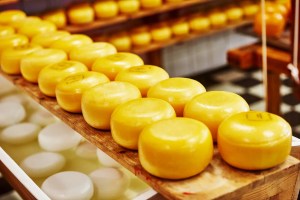
Fake cheese authentic cheese

Is this an authenticity issue?  Perhaps.  In Europe, the cheeses in question are subject to rules of Protected Designation of Origin (PDO).  Under these rules it is illegal to call a cheese Parmesan if it did not originate in Parmigiano-Reggiano and meet the strict manufacturing criteria of the Parmigiano-Reggiano Consorzio, an Italian consortium created by government decree.  In fact, US food giant Kraft had to rename its grated cheese ‘Pamesello’ in Europe to comply with these requirements.  In other parts of the world, the terms have come to be used as a generic name for the hard Italian cheese for which the region is known.  The Parmigiano-Reggiano Consorzio have decided to pursue sellers of cheese all over the world for claimed breaches of trademark.

Are the Italian-style cheeses in the news this week ‘replica’ cheeses?  No; they are real cheeses, made with animal milk and conforming to a certain regional style.  Would I call them inauthentic?  Perhaps.  Authentic food is food that is what it claims to be.  If a cheese is marketed with clear information about its place of origin, wherever that may be, then it is reasonable for a consumer to understand that it has been made in the style of Parma, rather than being made in Parma itself.  So according to my definition, that makes it authentic, at least when sold outside of Europe.  However, if the origin of the cheese is misrepresented by the seller, or on the label, then that makes the product inauthentic.  And, in most jurisdictions, illegal as well.

Replica wines

From ‘replica’ cheeses that are not exactly fake, my next stop on the web provided a fascinating insight into the emerging niche market of ‘replica’ wine.  Two companies are reinventing wine production and it is now possible to purchase a wine-like alcoholic beverage made without using grapes or fermentation processes.  In this case, I would say the use of the term ‘replica’ is perfect.  Ava Winery claims to have modelled its flavour profile on Dom Perignon’s Champagne, using a proprietary method that combines amino acids, sugars and ethanol in precise quantities.   Another company, Replica, offers a range of ‘masterful recreations’ of award-winning wines created by scientists using laboratory analyses of  key flavour characteristics.

While traditionalists may throw up their hands in horror at the thought of making that most noble of fermented drinks in a laboratory, there is nothing inauthentic about the beverages made by these two companies.  Both websites have very clear messages around the authenticity of their products.  Ava Winery states that their company is “in no way affiliated [with] Dom Pérignon® or Moët Hennessy USA, Inc. which does not endorse our products.”  Replica says that “Originality is overrated, especially when it’s overpriced.” Both are unapologetic about their mission to recreate fabulous flavours using science.  Replica’s range even includes a gorgeously packaged beverage called ‘Knockoff’ that is said to mimic a California Chardonnay.

Authentic, science-loving and beautiful-looking, what’s not to love?  I can’t wait to try some.


Credit: Replicawine.com
Replicawine.com

Share this:

  • Share on Facebook (Opens in new window) Facebook
  • Share on X (Opens in new window) X
  • Share on LinkedIn (Opens in new window) LinkedIn
  • Email a link to a friend (Opens in new window) Email

Filed Under: Labelling

25th February 2016 by foodfraudadvisors

Fish mislabelling; malicious fraud or sloppy supply chains?

Nice one, Food Standards Scotland.

What looked at first to be a number of cases of deliberate fraud was given some sensible attention and analysis by Food Standards Scotland (FSS), with unexpected results.  The organisation surveyed fish products supplied to their public sector food outlets, including hospitals and schools, to get a snapshot of the degree of species mislabelling. Of the 264 samples tested, around 6% of those (15) were mislabelled.

Any mislabelling is a breach of trust and a breach of food laws, but a result of 6% is relatively low and not likely to have a large economic impact.  Nevertheless, FSS investigated each of the incidences, retested products and spoke to the suppliers directly.


food fraud definition

Product labelled as haddock was the type most often found have been mislabelled during the survey, with ‘haddock’ found to be another fish species in 8 of 50 samples (16%).  As you would expect when considering fish species fraud, the most common substitute for haddock was a cheaper fish, whiting, the two types of fillets having similar appearance, flavour and texture.  Interestingly, however, almost half of all the ‘fraudulent’ samples were in fact an expensive fish (haddock) mislabelled as a cheaper species (whiting or coley).  Those results are obviously not ones you would expect to find when investigating fish fraud, and they are unlikely to be the result of any deliberate attempt to gain an economic advantage.

To the credit of the FSS they uncovered the cause of the mislabelling for most of the incidences; suppliers of the mislabelled fish admitted that they sometimes had trouble identifying incoming block fillets.  Some also admitted that they were not adequately separating or labelling different fish species during processing, handling and packing operations.  The suppliers in question have implemented improvements and have requested better labelling of their suppliers to prevent future occurrences; good news for the Scottish seafood industry.

More information and a copy of the report can be found here

Share this:

  • Share on Facebook (Opens in new window) Facebook
  • Share on X (Opens in new window) X
  • Share on LinkedIn (Opens in new window) LinkedIn
  • Email a link to a friend (Opens in new window) Email

Filed Under: Authenticity, Food Fraud, Labelling, Supply Chain

  • 1
  • 2
  • Next Page »

MORE FROM FOOD FRAUD ADVISORS

Photo of a can of Coca-Cola Diet . The brand is one of the most popular soda products in the world and it is sold almost everywhere.

Counterfeit Diet Coke in London?

Counterfeiting is the imitation of a food or beverage, including its brand, packaging, or labeling, with the intent to … [Read More...]

A woman wearing safety glasses and a lab coast holds up a blood sample in a test tube.

Massive fraud in U.S. antibiotic-free meat

Consumers perceive antibiotic-free meat as a healthier, more ethical choice than meat from animals raised with … [Read More...]

A packaged meat product with its false USDA number highlighted by a red circule.

A faked inspection mark prompts a recall in the US

While food fraud can result in food safety problems, it’s very rare to see a recall for food fraud that is initiated … [Read More...]

Unlabelled food cans are stacked on top of one another.

Tip-truck to table: waste diversion fraud

Organised crime groups are funnelling relabelled food back onto shelves I’ve been wondering … what exactly happened to … [Read More...]

Two shots of clear golden tequila served in traditional small glasses, gainst a solid black background.

Case study: Double brokering leads to disappearing tequila

A food fraud case study In the past, I've told you that food-waste-diversion crimes are being detected at unprecedented … [Read More...]

follow

  • View foodfraudadvice’s profile on Facebook
  • View karenconstable4’s profile on Twitter
  • LinkedIn

© Copyright 2015 - 2026 Food Fraud Advisors · All Rights Reserved · Privacy Policy · Return and Refund Policy